Musicality
May 26, 2026
Before Your First Jam: What the Experts Want You to Know
You can practice alone for years and still freeze in a group. Here's what experienced teachers and players say will actually prepare you.
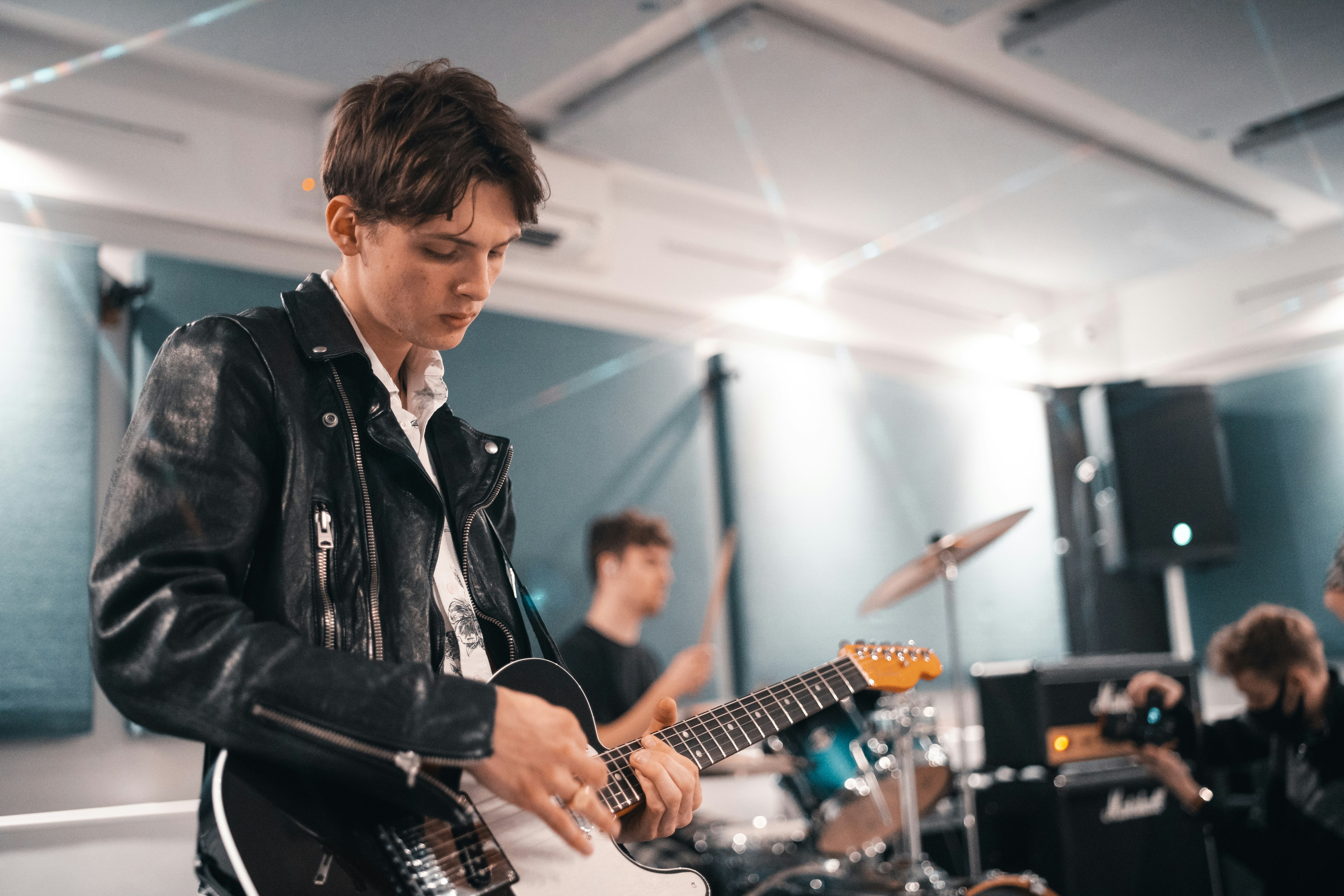
You can practice alone for years and still freeze the moment another musician starts playing beside you.
Key Takeaways
Listen More Than You Play: Cited as rule #1 across nearly every teacher's guide. The impulse to fill space is what marks a new jammer.
Most of It Is Rhythm: Even strong soloists spend the bulk of a jam comping. Train the rhythm hand if you want to be invited back.
Lock to the Kick: Your strum hand follows the kick drum, not the snare. Borrowed from the bassist's playbook, but it applies directly.
Practice for Distraction: A part you can play ten clean times at home has a chance in a noisy room. Nothing less does.
The Shift That Catches Most Players Off Guard
The single most repeated point across recent guides is also the least intuitive: when you finally play with other musicians, the most important skill is restraint. "Listen more than you play" shows up as rule #1 in nearly every guide — including GuitarWiz's March 2026 jamming explainer, Acoustic Guitar magazine's first-jam primer, and Justin Sandercoe's recent first-jam confidence guide on the Justin Guitar channel. The new jammer's instinct is to play constantly to prove they belong; veterans know silence is part of the contribution.
What Experienced Players Tell You to Drill
Most teachers converge on a small set of preparatory skills — none of which home practice tends to emphasize.
Rhythm chops dominate. TheGuitarLesson.com's jam-session guide bluntly notes that "about 80-90% of your playing will be rhythm guitar" at most jams, even if you can shred. If your strumming, comping, and inversions feel weaker than your lead playing, that's the side to drill before your first session.
Time feel beats speed. The bassist's framing translates directly. Bass Musician Magazine's guide to locking with a drummer recommends a metronome set just under your comfortable tempo, with your strum hand following the kick drum rather than the snare. Five minutes a day of focused work on a slow metronome, ignoring everything except where your downstroke lands, is among the most effective drills for jam preparation.
Practice for distraction. Steve Morse, interviewed in Guitar Techniques magazine, captured an under-discussed truth: drill a difficult part to ten clean reps at home before relying on it at a gig, because the room won't be quiet.
The Etiquette Nobody Teaches Directly
Several recent guides do a good job of cataloguing the unwritten rules of jam culture.
Acoustic Guitar magazine's 7 Things You Need to Know Before Your First Jam Session is the best general primer for traditional acoustic jams — bluegrass, old-time, Celtic — where there are real customs around song-calling, key-setting, and solo rotation.
GuitarWiz's how-to article covers the rock and blues equivalent: don't play over the vocalist, don't change keys without warning, learn the common hand signals (a nod for tempo, a raised hand for "ending"). These conventions exist because verbal communication mid-song is impossible.
Final Thoughts
The skills that get you invited back to a jam are different from the skills you've been polishing alone. Listening, restraint, holding time under pressure, hearing changes in real time — those are what matter, and they're exactly what bedroom practice doesn't drill. The good news is that experienced teachers have already mapped this territory clearly. The articles and videos linked above will get you further than another fifty solo practice sessions.
Further Reading: The Practice Journal: Why Tiny Numbers Beat Big Feelings →