Musicality
May 15, 2026
Practice Serves the Music, Not the Other Way Around
Most guitarists practice for years without becoming musical. The fix isn't more practice — it's pairing every drill with immediate musical application.
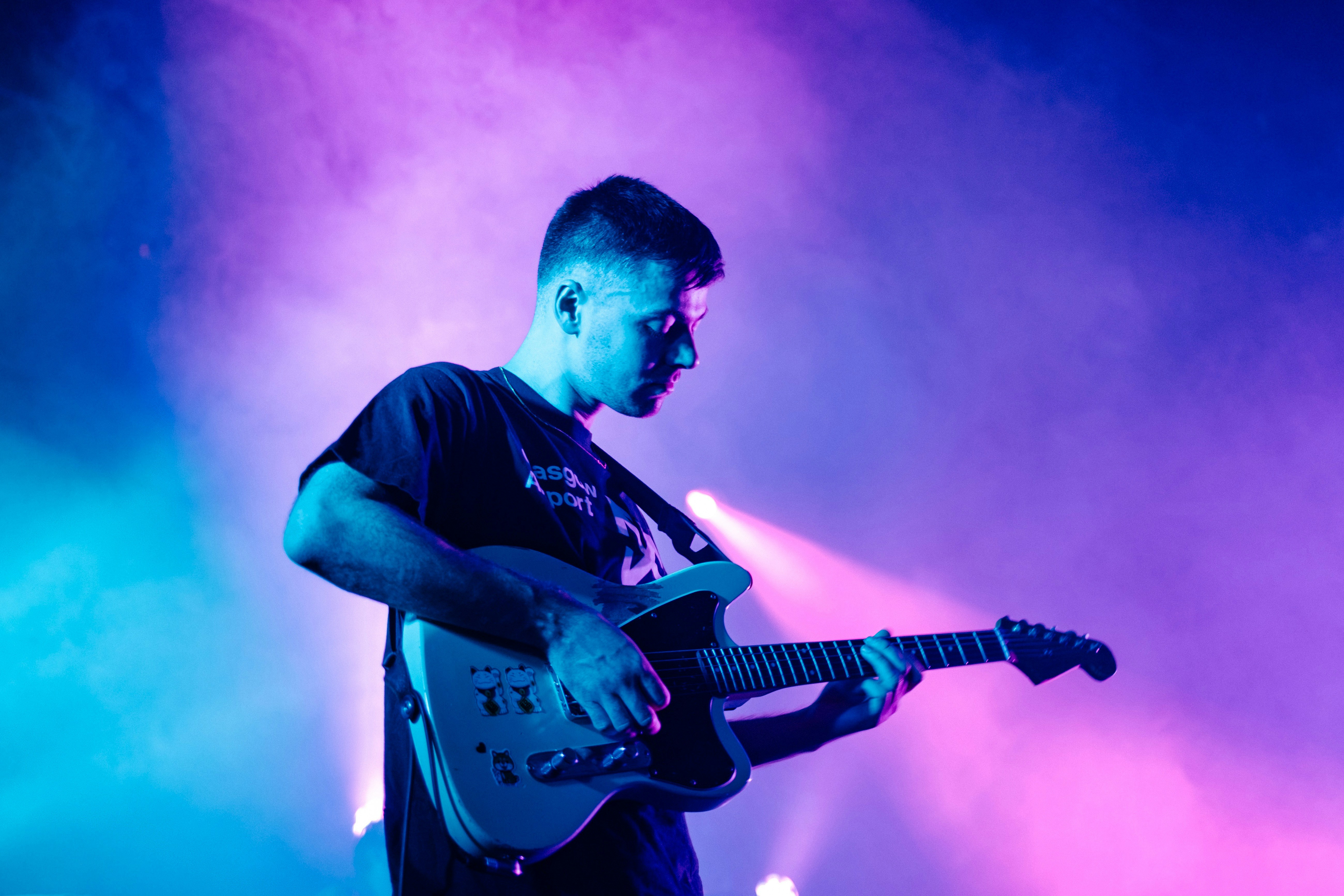
Most guitarists practice for years without becoming musical — not because they don't practice enough, but because their practice never becomes music.
Key Takeaways
Drills Don't Transfer on Their Own: A scale you run cleanly in isolation does not automatically appear in your improvising. The transfer is a separate skill.
The Real Goal Is Capability: Practice should make you able to play the music you hear in your head — not just produce clean scales in a quiet room.
The Closed Loop: Practice the technique, apply it musically, notice the gap, practice the gap. Skip the loop and the gap never closes.
Time Allocation Is the Real Question: Too much technique work and too little music-making, and the technique never becomes music.
Why Pure Technique Practice Plateaus
Most players treat practice and music as two separate activities. Practice is the gym — scales, drills, metronome work. Music is the show — songs, improvising, playing for fun. The assumption is that the gym work automatically shows up in the show.
It doesn't. Skill transfer in motor learning is context-dependent. A scale you run cleanly at 80 BPM with a metronome does not appear, intact, in a chord-progression improvisation. It has to be carried across that gap on purpose. Without that step, scales stay in the practice room and music stays in the songbook. The two never meet.
A Lesson From Joe Satriani
I came across a short Joe Satriani clip that hit exactly on what we're trying to do at FretPulse — practice with purpose, in service of becoming a musical player. Satriani is one of the most respected guitar teachers of the past several decades, and his message in the clip is direct: stop playing scales, start playing music.
This is not anti-technique. Satriani himself spent thousands of hours on it. The point is that technique without musical application is half-trained. The hands learn the shapes. The musician never develops. The fix isn't doing less technical work — it's pairing every technical session with a musical one. Watch the 90-second clip →
The Closed Loop
The "Closed Loop" is a practice format that solves the transfer problem. It pairs every technical session with an immediate musical application, so the gap between drill and music gets crossed every day instead of never.
Execution
Practice the Technical Thing (10–15 Minutes): A scale, a chord change, a picking pattern. Whatever you're working on this week.
Apply It Musically (5–10 Minutes): Improvise using that scale over a backing track. Write a short riff using the chord change. Play a phrase that demands that picking pattern.
Notice What Doesn't Work Musically: The scale runs cleanly but sounds aimless. The chord change is clean in isolation but stumbles inside a song. Those are the gaps.
Practice the Gap Next Session: Whatever the musical application exposed becomes your next technical focus. The loop closes itself.
How the Loop Breaks
Two failure modes break the loop in opposite directions. The first is the wait-until-ready mistake: practicing endlessly with the promise of using it in real music once you're "ready." Ready never arrives. You end up with strong isolated technique and no music.
The second is the only-play-songs mistake: never doing focused technique work, only learning whole songs by ear or tab. This avoids the transfer problem but caps your ceiling — you can only play music as complex as the techniques you've already absorbed by accident.
Both fail. The Closed Loop is the middle path: focused practice plus immediate musical application, every session.
Final Thoughts
The point of practice is to expand what you can play. If today's practice doesn't show up in tomorrow's playing, it isn't working. Practice serves the music. That is the entire job.
Further Reading: The Boring Scales That Build Real Musicality →