Mechanics
Feb 17, 2026
Minimum Effective Pressure: The Secret to Speed and Stamina
Stop fighting your guitar. Learn how to identify "The Death Grip" and find the exact amount of pressure needed to play clean notes with less effort.
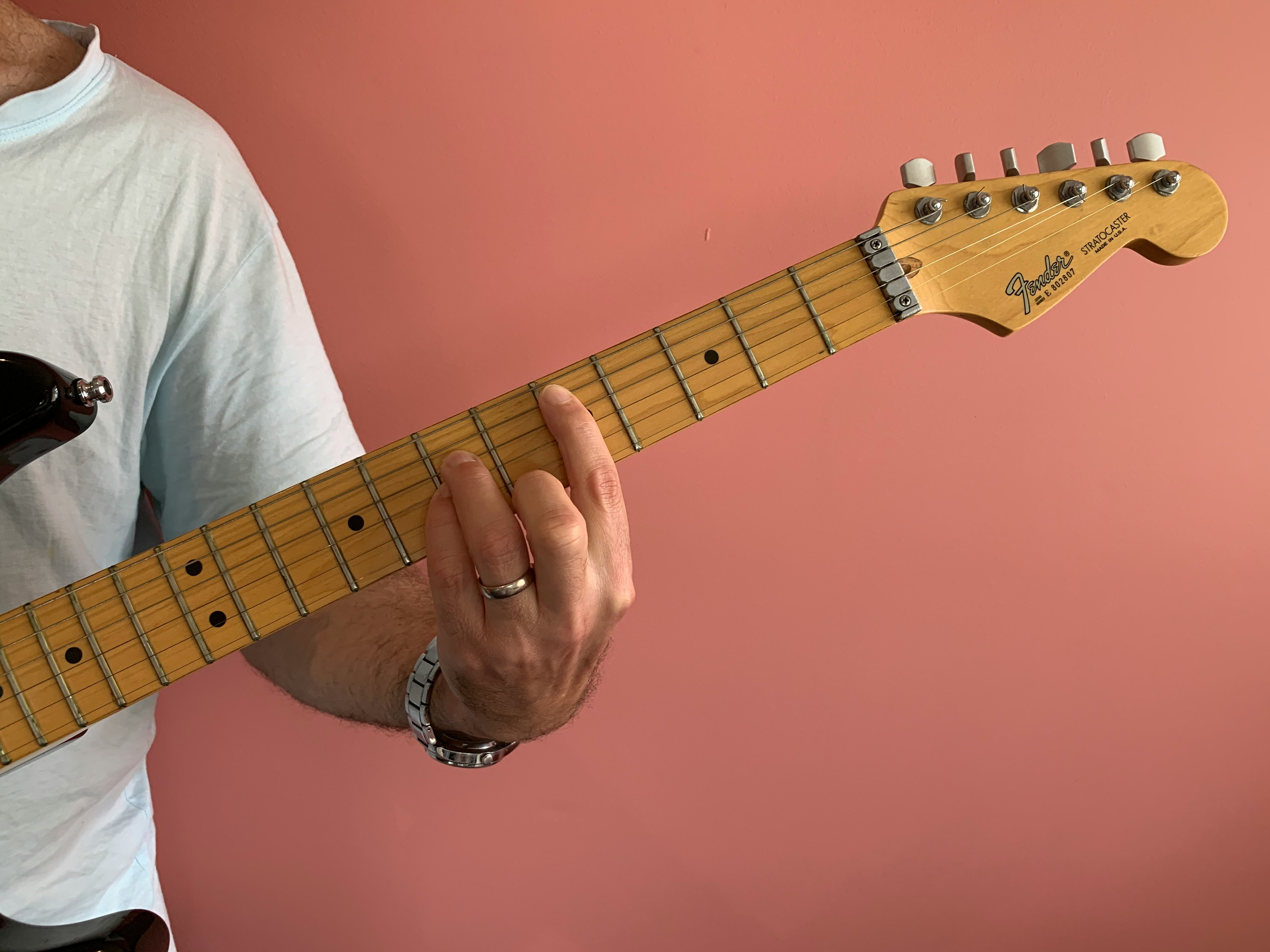
Most players fail to realize that the greatest obstacle to guitar speed is not a lack of strength, but an excess of tension.
Key Takeaways
The Death Grip: Pressing harder than necessary causes muscle fatigue and slows down transitions.
Sensory Awareness: Learning the exact "breaking point" where a note buzzes vs. rings clear.
The "Touch and Release" Method: A specific drill to recalibrate your finger pressure.
Stamina Gains: Reducing pressure allows you to practice longer without physical strain.
The Cost of Over-Pressing
When you first start playing, your instinct is to clamp down on the string to ensure the note sounds. Over time, this becomes a "default" setting for your brain. This excess tension creates a physical "braking" effect. If your hand is constantly in a state of high tension, it cannot move quickly to the next position.
Bio-Mechanical Friction
Every extra pound of pressure you apply requires a corresponding amount of effort to release. If you are using 5lbs of pressure when only 1lb is required, you are essentially fighting your own muscles to move your hand.
Finding the "Threshold of Sound"
To fix your technique, you must find the absolute minimum amount of force required to produce a clean note.
The Calibration Drill
Place your finger on a string as if you are going to play a note, but do not press down.
Pluck the string; it should return a muted tone.
Slowly increase pressure while continuously plucking until the note just barely rings clear.
This is your "Minimum Effective Pressure." Any force applied beyond this point is wasted energy.
Implementing "Light Touch" in Daily Practice
Recalibrating your nervous system doesn't happen in one session. It requires deliberate attention during your standard drills.
The 2-Minute Reset
Before you start practicing a difficult riff or scale, spend two minutes performing the Calibration Drill on every finger. This primes your brain to prioritize efficiency over force. Over several weeks, this "light touch" will become your new muscle memory.
Final Thoughts
Speed is a byproduct of efficiency. By removing the mechanical "noise" of excess tension, you clear the path for faster transitions and longer, pain-free practice sessions.
Continue Learning: If you found this helpful, the next logical step in building a fast, relaxed fretting hand is mastering distance.
Further Reading: The 'Flying Fingers' Fix: Mastering Economy of Motion →