Mechanics
Nov 27, 2025
The 'Flying Fingers' Fix: Mastering Economy of Motion
Excessive finger movement is a secret speed killer. Learn how to keep your fingers close to the fretboard for faster, more accurate transitions.
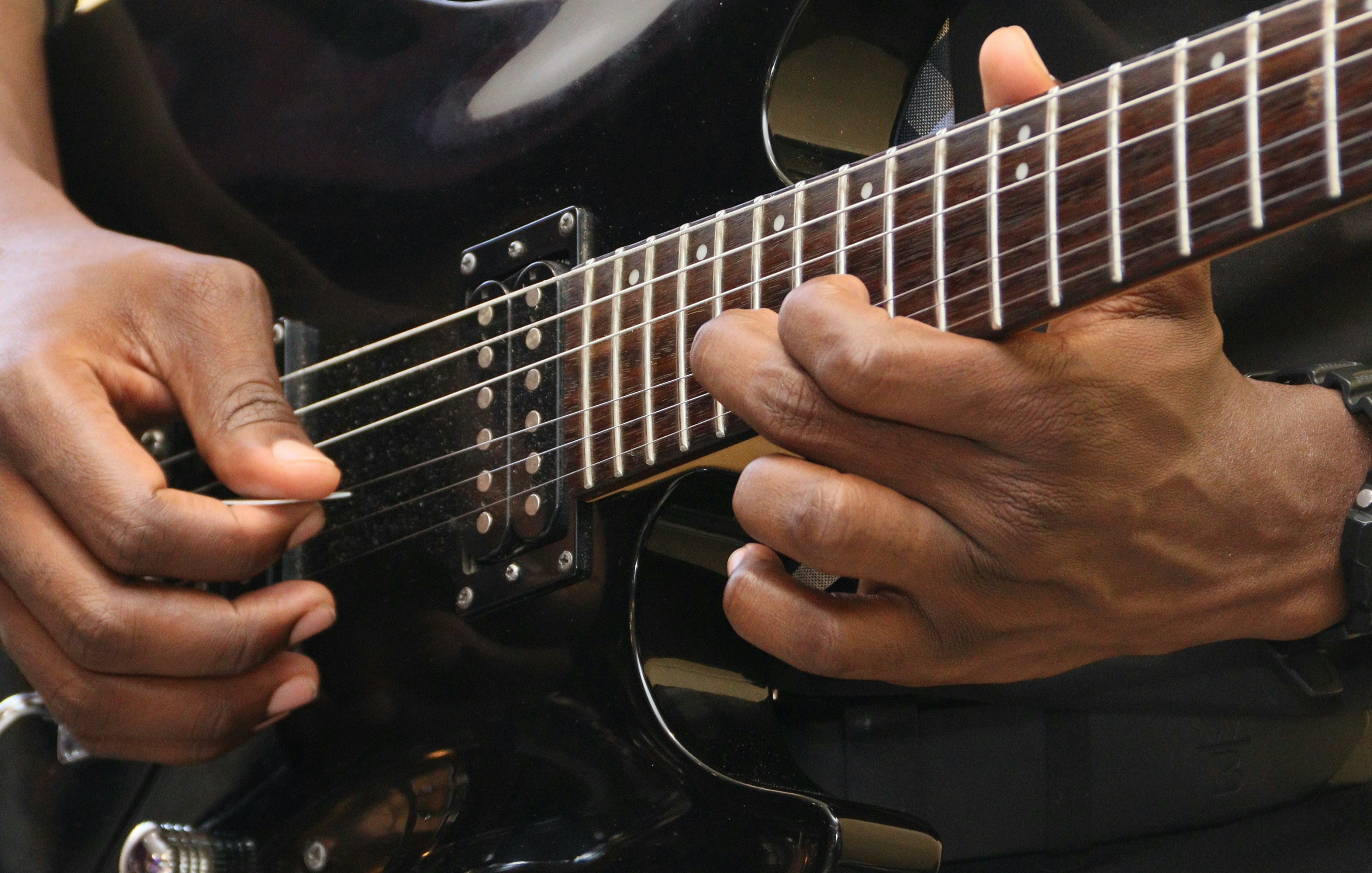
The secret to high-speed guitar playing is not moving your fingers faster, but moving them less.
Key Takeaways
Wasted Motion: Lifting fingers high off the fretboard creates a physical "speed limit" that is difficult to overcome.
Tension vs. Release: Flying fingers are often a result of pressing too hard; the finger "snaps" back when the pressure is released.
The Touch-Point Rule: Keeping fingertips in contact with the strings even when not playing to maintain a "ready" position.
Slow-Motion Recalibration: Using extremely slow repetitions to shorten the physical path of each finger.
The Distance Gap
Most players struggle with speed because they are taking a longer physical path than necessary. If your finger moves two inches away from the guitar after playing a note, you have to travel those same two inches back just to reach the string again. By reducing that gap to a fraction of an inch, you remove the "dead air" between your notes.
Identifying the "Flying" Finger
A flying finger occurs when a finger—usually the pinky—shoots upward or curls away from the neck while other fingers are busy. This disconnects the finger from the fretboard and forces you to "reset" its position every time you need to use it.
The Sticky String Exercise
This exercise is designed to reduce the vertical travel of your fingers by removing the "lift" entirely.
The Press: Place your index finger on a fret and press down to play a clear note.
The Release: Release the pressure so the note stops ringing, but do not let your fingertip leave the string.
The Contact: Your skin should stay in light contact with the metal of the string at all times.
The Progression: Play a simple 1-2-3-4 pattern up the string. The rule is that no finger is allowed to lose physical contact with the string, even when it is not the finger currently playing the note.
Correcting the Tension
If you find it impossible to keep your fingers close, it is a sign that your hand is too tense. When muscles are tight, they tend to "spring" back into an open position.
Mechanical Reset
If your fingers are snapping away from the neck, stop playing and shake out your hand. Lower your thumb to the middle of the back of the neck to open up your hand's arch. A relaxed hand naturally sits closer to the strings, making it much easier to maintain a short path of travel.
Final Thoughts
Improving your speed is a matter of shortening the trip. By training your fingers to stay near the strings, you remove the mechanical waste from your playing and make fast transitions feel effortless.
Further Reading: Tendon Isolation: Breaking the Ring and Pinky Link →